


17 Apr, 2026
Healthy wetlands protect against extreme events like storm surges and flooding, secure water, food and energy for billions and support countless livelihoods. Still, they face the risk of destruction and disappearance.
What is the outlook for their wise use to be integrated in developmental planning climate financing, and businesses? This was the question at the heart of the Climate Talk ‘Beautiful Wetlands: Partnering for Water, Partnering for Life’ organised by the Embassy of Germany to India & Bhutan with the Consulate General in Kolkata.
Held at the Goethe-Institute on 16 April 2026, the panel discussion and the engaging discussion with the audience brought together perspectives from government, the private sector, and civil society. The role of wetlands as ‘hidden infrastructure’ underpinning water, raw materials, and risk reduction was reiterated. The discussion highlighted how this relationship is clearly brought to light in West Bengal – a region with diverse kinds of wetlands from small village ponds providing sustenance, larger bheris running fishery industries, dense mangroves buffering from storms, rich floodplains supporting paddy cultivation and Kolkata’s very own East Kolkata Wetlands, the city’s own nature-based wastewater treatment system also providing great ecological subsidy to the city through affordable fish and vegetables.
Thus, it was reaffirmed that along with the local communities and the administration, the private sector overall has a significant stake in healthy and functional wetlands. By protecting wetlands and the communities that are supporting their value chains, businesses can secure better quality and sustainable raw material and reduce operation costs through better water availability and quality. Protected coastal wetlands also can act as protective green infrastructure. The need for positive collaborative action between governments, private sector and communities through various modes beyond Corporate Social Responsibility such as ‘carbon credits’, stringent ESG compliance and mobilising the needed financing as part of essential business operations was highlighted. The need to engage effectively and ethically with local community groups and incorporating positive traditional practices of wetland wise use in management planning also emerged as a key action area. The need for streamlined governing frameworks and political will that encourage community-led approaches for wetland management and incentivise positive pro-planet actions by businesses was also underlined.
The message was clear – wise use of wetlands is possible only through partnerships and collaboration of whole-of-society.
** The Climate Talk Series, organised by the German Embassy facilitates impactful dialogues on environmental policy cooperation, bringing together voices from policymakers, academics, think tanks, and industry to inspire and mobilise stakeholders toward sustainable and equitable environmental stewardship. **
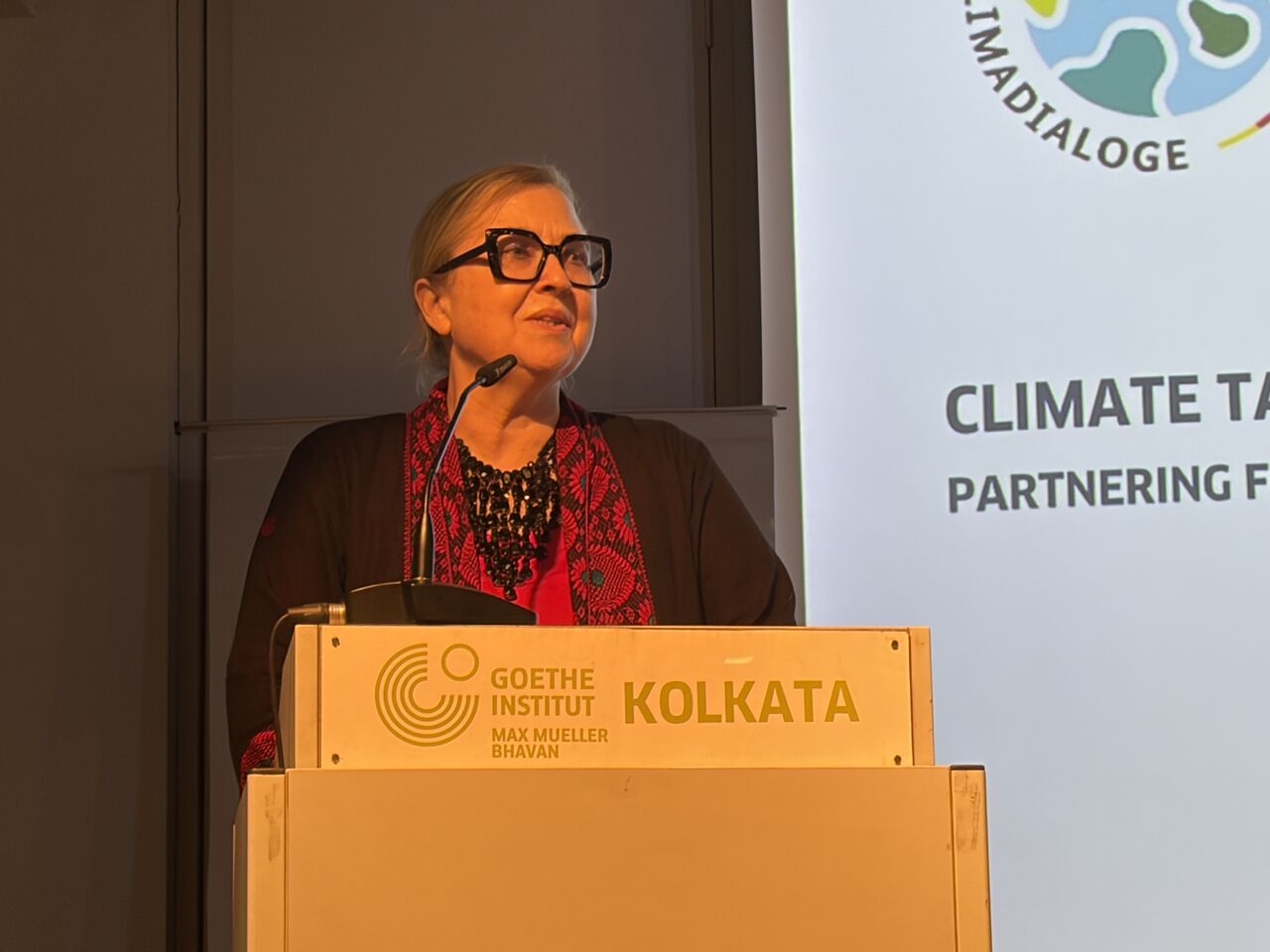 Barbara Voss, Consul General, German Consulate Kolkata opened the Climate Talk © Taina Dyckhoff
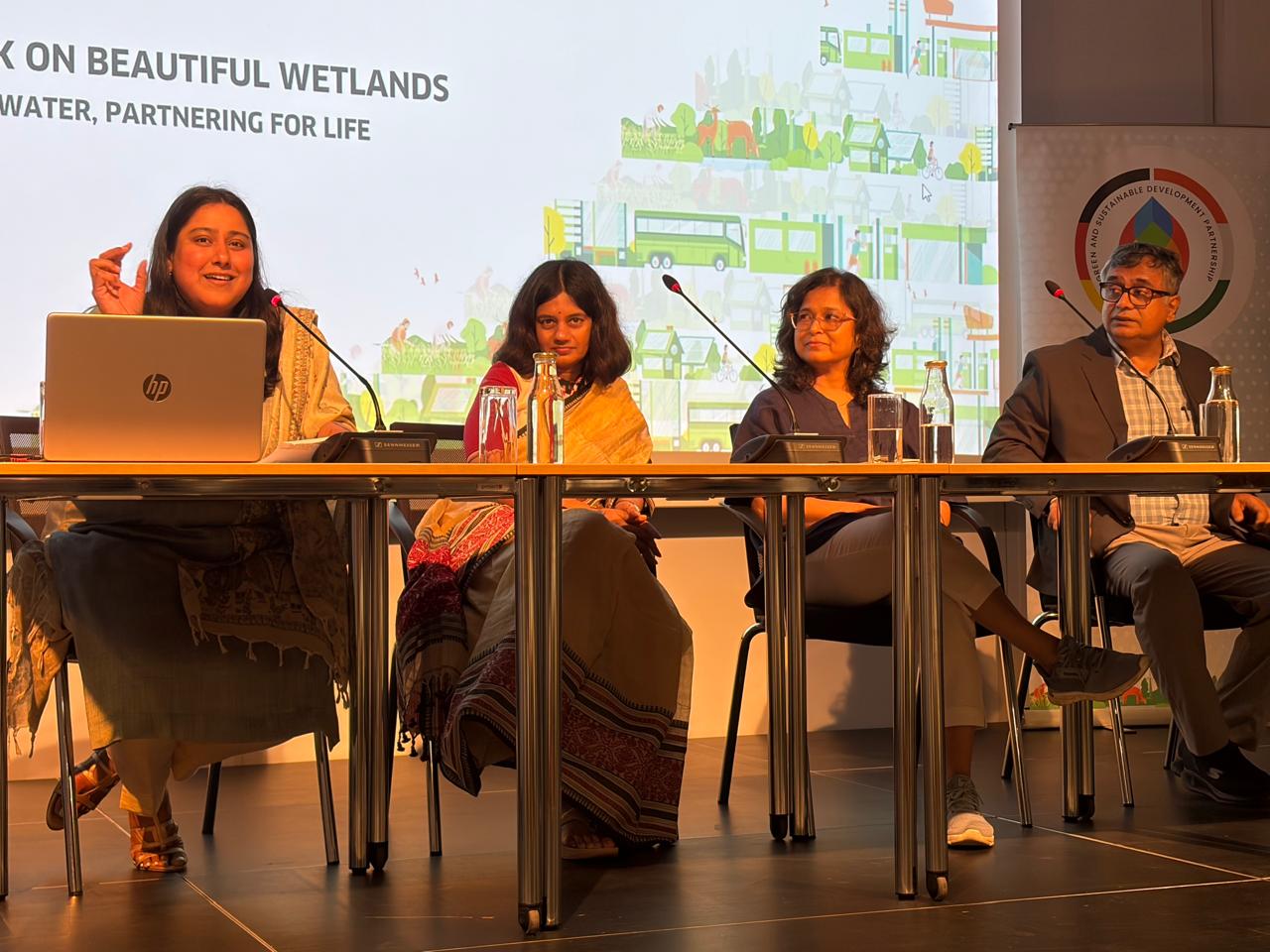 Climate Talk Panellists (left – right) Moderator Shambhavi Krishna (GIZ), Ms Madhura Mitra (PwC), Ms Nobina Gupta (Disappearing Dialogues) and Mr Debal Ray (West Bengal Public Service Commission) © Taina Dyckhoff
© 2014 IGBP. All Rights Reserved.
Site By: Virtualpages
